
Kwento Ko 2: Married Couple
Adoption Awareness Month 2022
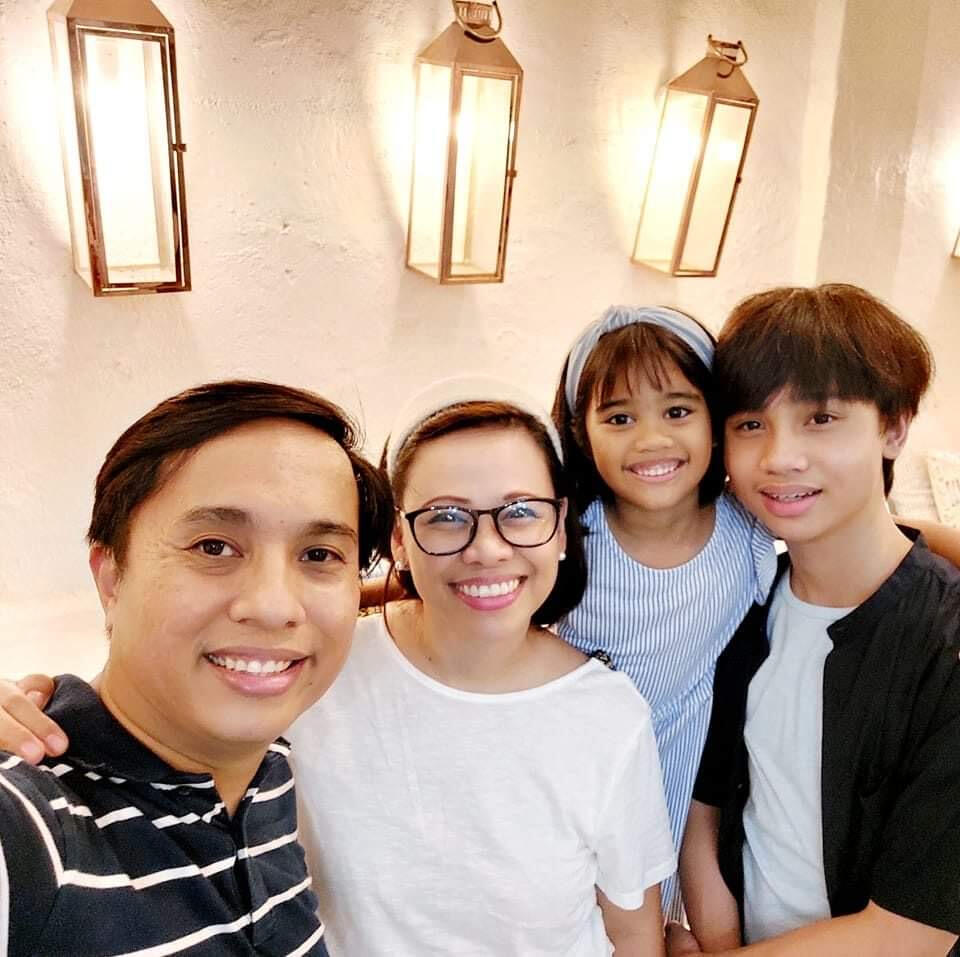
Mrs. Diane Consolacion tells us about her experience as an adoptive parent who is married and has a biological child.
The Consolacion family consists of Ms. Diane, Mr. Aldryn, their 14-year-old biological son, and their 7-year-old adoptive daughter Aliane. Aliane was a foundling and was surrendered to DSWD. She was said to be one of the most independent among her batch. The name Aliane came from a combination of Ms. Diane and Mr. Aldryn's names.
1. How has the experience of being an adoptive parent been for you?
It has been challenging but mostly rewarding from the first day since we got her. We have actually been wanting to have a child after my son turned one. Unfortunately, I had difficulty conceiving one. I felt incomplete and wanted to raise another child - financially, psychologically, and emotionally we wanted to give more but we only had one child.When Aliane came, we felt more complete. We didn’t think of wanting a child after anymore. It felt that she was her all along the was missing.Aliane felt like the ideal adoptive child. She was the sweetest child i ever met, that even at one year old, I saw her empathy. I even remember driving her on the way to gymnastics class one time and I was silent since it was my first time to drive that road again, and then after that she suddenly said “Mommy are you okay?” She is socially smart - she can feel even if you don’t say anything.
2. Have you always planned on becoming an adoptive parent? What were the reasons you decided to adopt?
I actually got pregnant immediately after marriage at age 28. I was then advised by the OB to hold off having a child for a year after the first because he was delivered via a C-section. After two years, we tried again, but the stats were not looking good, what they called second infertility.Adoption then was not the first option, we actually considered IVF. However, when I met a student during my volunteer in La Salle, that student mentioned adoption as they did not want to get pregnant. They said, “...because there are so many children out there who are abandoned and have no parents to take care of them – why bring a child when there are so many out there who still need to be taken care of.” After this, I prayed, I'm a big believer of signs, one thing led to another.My husband was not into it at first; gave him time to discern on his own because I told him we shouldn't push through with it if its just half-hearted – I did not pressure him I gave him time. Yet, one day after a Sunday mass, he told me he was ready to adopt – after hearing the homily that goes: “It’s only what you did but what you did not do when you could’ve done something that is the sin” – it got into him that they had the capacity and means to take care of another child so why not go with it, do something about it – it was his dealbreaker. We then went to DSWD, got a one-on-one briefing on adoption, and was immediately eligible for adoption.Adoption was not really a dream but it felt like we were led toward it, we heeded the call – one sign after another. I really prayed to God with this decision – it was the will of God for me so I believed - the challenges felt normal, and everything was generally smooth-sailingMy advise for those who are planning to adopt: pray for it; adoption is not for everyone, if its Gods will for you then everything will be okay and so far that is what happened to us.
3. Were there changes and challenges that your family encountered and overcame upon adoption? If so, what were they?
The idea of adoption is a taboo topic in the Philippines. Most of our elder family members are conservative and especially sensitive in the idea of adoption but it was a decision we were already firm about as a family. I thought that if all families would think that way then what would happen to all abandoned children, hindi naman nila pinili mabuhay dito – so we pushed through and eventually they were all also on board with it as soon as Alian came into our lives. In fact, she is very close and spoiled to her grandparents and we are very happy that she does get along even with our son.I have never encountered anyone bullying her about being adopted since from the very beginning we are already very open about her adoption. I try my best to talk about Aliane’s adoption as normally as I could in conversations, even with her. I feel like with that way even Aliane feels more secure – I never sensed that she ever felt pity or shame for our situation. I even had a welcoming post about her in my Facebook account to let everyone know that we are welcoming a new child into our family.
4. What misconceptions are there about families with adopted children and the act of adoption itself do you want to debunk?
Adoption is something that should not be covered up. It's something that you shouldn’t feel ashamed about. As much as possible, I think talking about adoption should be normalized especially in conversations for it to become a less sensitive and conservative topic in our community.Adoption is as beautiful as giving birth to a child. Adoption brought more joy to our lives .
5. What advice or words of encouragement can you give those married couples with or without children who may be interested in adoptions but currently have apprehensions about it?
Read more about adoption, research and familiarize yourself with adoption. In my case, I bought books about adoption and read about the different processes available (inquire at DSWD or different adoption centers).Talk to people who have experienced adopting. Have a conversation with people like me and learn if it is also for you or if it is something that you will be able to handle as a couple as well. Remember that adoption should always start from a noble intention – it is not about what the child can give you but more so on what you can also give to the child.I would also recommend choosing the legal path of adoption. This will solve so many of the emotional and psychological issues that may arise from adoption.Once you are also decided on adopting, pray and wait for God’s blessing.

Kwento Ko 3: LGBTQ Parent
Adoption Awareness Month 2022

Mr. Jeff Mendoza tells us about his adoption experience as gay solo parent.
Mr. Jeff Mendoza is a 42-year-old man who adopted his daughter Xia almost 5 years ago. She is now turning 6 years old and is a kinder student at La Salle Greenhills. Xia likes art, music, and playing the piano.
1. How has the experience of being an adoptive parent been for you?
Going five years already. It’s been great so far. Easier than I anticipated but that’s partly because I thought about it for years before I did it. So I’m 42 years old now. I started thinking about adoption I turned 30 or 31 then ended up submitting my application to DSWD until I was like, 34 years old so it took me about 3, 4 years to think about it because I knew that if I was going to start my own family, I was going to be a solo parent and that I wasn’t going to raise a baby with a partner because I said, you know, that part of my life was over and I needed to focus on my career, my family. Then, I ended up, say, deciding, “Okay, maybe it’s time to share my blessing with other people,” and then I knew about friends who adopted and saw how happy they were.The three, four years it took for me to finally make the decision was really when I started researching, looking at stories online, and talking to friends who have adopted—both legal and non-legal ways. So… I prepared many, many aspects of my life so like the house, looking at options for school, really deciding, “Okay, what do I share with DSWD, right?” because it’s not really common for solo parents, more so, like, solo gay parents to file for adoption so I had all of those ready.So, when I was finally approved, everything became fairly easy. I’ve been extremely blessed from the day I brought home Xia. And I’ve made it a personal mission to share my story so Sir Romeo knows, even DSWD knows that every time I get asked or if there’s an opportunity, I would volunteer because I want people to know that there are successful solo parents adoption stories out there and it’s not as hard as people think. You just need to ask the right people and do the right research.So far, the five years have been really, really good. Probably the best decision I have made with my life.
2. Have you always planned on becoming an adoptive parent? What were the reasons you decided to adopt?
30 years old was the turning point. Early, like, your age, college, post-college, I’ve had series of relationships and most of them did not work. When I turned 30, I was enjoying a pretty successful career—promotion after promotion, financially was getting more stable. Then, I made the decision through a series of failed relationships and I felt, “Okay, I would focus on my work and taking care of my family.” Then, a couple of years after, as I mentioned, I had officemates and friends that adopted that made me think about, “Okay, I have so much blessings to share and there are many many kids out there that need more permanent homes. Is this something that I could do?” When initially, I felt I couldn’t, right? So that’s what prompted me. At 30, I said, “Let’s stay single, focus sa [career]—I wanted to share my blessings with others.” And when I started asking around, it felt like it was something I needed to do—a calling, parang ganon. You know how it feels sometimes, like, this is something I was meant to do.
3. Were there changes and challenges that your family encountered and overcame upon adoption? If so, what were they?
So at work, I’m very workaholic, very competitive. I’ve mentioned that a big part of my decision to stay single and eventually adopt was because I was enjoying a pretty successful life in the workplace noh. So that was a big adjustment. You know, in hindsight, looking back now, being a father to my daughter has allowed me to appreciate the people in the workplace more like the people who have worked for me or people who I have worked with in the past where I would push them to work, work, work without realizing that, “Hey, these are moms, these are dads that have lives outside of work.” And I didn’t have that perspective previously. That was a big adjustment, right? Even right now, I’m still highly competitive. My teams know that, you know, when you’re part of my team, you have to excel all the time, but now, there’s that added adjustment on, “Okay, there has to be a balance.” So I work here, working, but before being officemates, before being bosses [or peers], we’re parents—for those who are parents—parents first. So that adjustment in dealing with workmates was one.The schedule also, right? Raising a child as a solo parent has been a big adjustment for me. I’ve had to cut down on my social life. I’ve had to work my schedule around my daughter’s life. My weekends now… so, I work at night… my Saturday. I wake up Friday and then I won’t sleep until Saturday night because Saturday morning is like our sacred family time, right? We go to her piano classes. The adjustment is primarily around the scheduling partly nga as a solo parent. We have gotten used to it., and, you know, it doesn’t feel like it’s a burden because the time I’m spending awake even after hours and hours of working,In terms of issues about bullying, that hasn’t happened. I always ask her, “What did they ask you about adoption?” or “Paano kapag tinanong ka?” or “Is that a good thing or a bad thing?” She would say it’s a good thing. Why? Because adoption means love. Right now, even at five, going at six, she knows those words — the foundational things about our family life.At five, she’s heard the concept, she’s heard the word, she knows, right? And this was part of my decision even before adopting that if I was gonna do it, it will not be concealed, right? It would have to be disclosed to the child at the right time with positive words so that she understands our full family story. So even as a toddler, we would start reading books — child-friendly books about adoption and alternative family life and we started talking. And then at 3 or 4, I started introducing the concept of adoption and even before the Filipino term “ampon” because my thought process then was she’s gonna hear about it in school, outside of our house, and it’s best that she hears it from me first. If she hears it from a place of love, right? Because if someone teases you na ampon ka in the workplace and if you have no concept of that, it could be negative, right? If your child — if, like, my Xia knows, my little daughter knows that pagiging ampon, being adopted is based on concept of love and family so she won’t get hurt even if she hears that outside.She also recently asked me about me being gay. So, we’re talking noh? Again, in terms that are simpler and age-appropriate. She sees me watching RuPaul’s Drag Race. She knows that some of her ninongs and ninangs are either trans or, you know, out gay ninongs or want to be called Ninangs. So she has a somewhat broad understanding of ganong lifestyle. I think a couple of days ago, she asked, “Daddy, why are you gay?” So I had to explain to her that, “I don’t know, but that’s maybe how I was born or that’s how I chose to live my life. But does it matter if I’m gay or not?” And she said, “No, it’s okay.”There’s this story na we always talk about na all families are special. Some families are two moms, two dads, one dad, one mom, a dad and a mom with three kids, a mom and a cat. There’s a very special book that we used to read a lot when she was young and I always go back to that story because I know it resonates with her — ‘yung concept of different types of family.
4. What misconceptions are there about families with adopted children and the act of adoption itself do you want to debunk?
I think the biggest one is that it’s different from other types of adoption or family life. It is slightly different, ‘yung dynamic because it’s just your child and you, but at the core of it, it's the same because, you know, I grew up with a big, big family and I think, at the core of… ‘yung what happens in our house, when we talk, it’s the same.
5. What advice or words of encouragement can you give those married couples with or without children who may be interested in adoptions but currently have apprehensions about it?
Okay. Number one is the recent law that was just passed makes it like 20 times simpler now to adopt whether you are a solo parent, LGBT couple, a solo LGBT person, or a typical mom-and-dad. The process is now purely administrative, right? So in my case and most other people who have adopted until recently, you know, it was a fairly lengthy process. You will adopt then after you get the baby, you would have to file a petition on court to get the name changed, you’d have to appear in court, you have to pay a lawyer. That’s all gone.If there’s one thing… well, the very first thing is that it’s so easy now. All you need is to contact the DSWD, there’s a new separate entity that takes care of adoption now. You just need to call and ask or e-mail and they will be able to help you. The process takes months versus years previously. There’s very little expense attached to the whole process because there’s no need for lawyers so that’s one. Then, specifically to the LGBTQ community, do it! If you have a sense of wanting to share your love… My experience… it makes your life a hundred times more blessed. In my personal case, it gave me more purpose in life. It allowed me to, you know, have a better sense of altruism, right? Not just helping my kid but other people around us. Just go do it!From an acceptance standpoint, you know, look around. There are many, many kids. There are more and more kids globally — hopefully, more in the Philippines too — multi-faceted individuals that have come from alternative family life situations like solo parents or LGBTQ couples or a solo gay dad or gay mom. That’s why I’m okay to talk about our story because I think people just need to see that there’s a million kids growing up to the future from adoptive family lives.